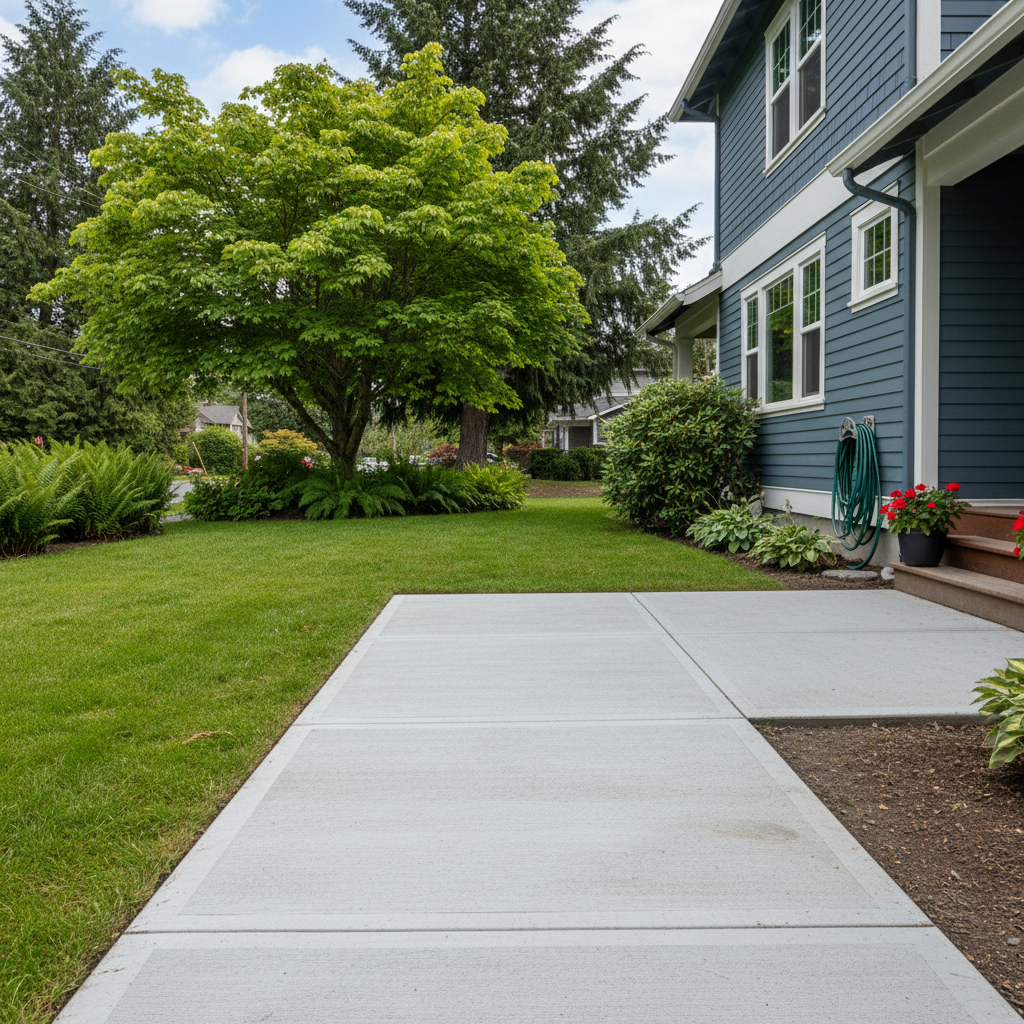
So, you’ve invested in concrete repair for your driveway, patio, or walkways. That’s smart. Whether it was a little crack filling or a bigger slab replacement, you want that work to hold up. And it will, if you treat it right. Think of it like a new car – you wouldn’t just drive it off the lot and never change the oil, right? Concrete’s the same; a little care goes a long way, especially with our unique weather here in Bremerton.
Extending the Life of Your Concrete Repair
The biggest thing you can do to make your concrete last is to protect it. Once your repair is fully cured – and I'll always tell you how long that'll be – you should consider sealing it. A good quality penetrating sealer is your best friend here. It soaks into the concrete, making it less porous. Why does that matter? Well, we get a lot of rain here in Kitsap County. Water is concrete’s number one enemy when it comes to long-term damage. It gets into those tiny pores, and then when winter hits and temperatures drop below freezing, that water expands as ice. That expansion is what causes those little flakes and cracks to get bigger. A sealer helps repel that water, minimizing the freeze-thaw cycle damage.
Another big one is keeping it clean. Don't let moss and mildew take over. They hold moisture against the surface, which, again, isn't good. A simple pressure washing once a year or so, maybe in the spring after all the winter nastiness, can make a huge difference. Just be careful with the pressure washer; don't get too close with a fine tip, or you can etch the surface. A fan tip held a foot or so away is usually plenty.
Also, watch out for heavy loads. If you've got a new concrete pad, don't park your RV on it the day after it's poured. Give it time to gain its full strength. Even after it's cured, try to distribute heavy loads. If you're moving something really heavy, use plywood sheets to spread the weight over a larger area.
Regular Maintenance: What You Need to Do
Okay, so what does 'regular maintenance' actually look like? It’s not rocket science, I promise.
- Sealing: As I said, this is huge. Most sealers need reapplication every 2-5 years, depending on the product and how much traffic the concrete sees. If water stops beading on the surface, it’s time to re-seal.
- Cleaning: A good sweep or blow-off regularly to get rid of leaves, dirt, and debris. Pressure wash annually to remove grime, moss, and algae. For stubborn stains, a mild detergent and a stiff brush can work wonders. Just make sure to rinse thoroughly.
- Crack Monitoring: Even with the best repairs, concrete can still shift a bit over time. Keep an eye on any existing control joints or repaired areas. If you see a small crack forming, it's often easier and cheaper to address it when it's small than to let it grow into a bigger problem.
- Drainage: Make sure water is draining away from your concrete, not pooling on it. If you have gutters, keep them clean so water isn't overflowing onto your driveway or patio. Proper drainage is key to preventing water damage and erosion underneath your slabs.
Warning Signs of Trouble
You’re not a concrete expert, and you don’t need to be. But knowing what to look for can save you a headache down the road. Here are some red flags:
- New or Expanding Cracks: A hairline crack isn't always a disaster, but if it's getting wider, longer, or if you can stick a quarter in it, that's a sign.
- Uneven Surfaces or Sinking Slabs: If one section of your driveway or sidewalk is noticeably lower than the adjacent one, or if you see trip hazards forming, that’s a problem. This often points to issues with the soil beneath, like erosion or poor compaction. We see this a lot in older Bremerton neighborhoods where the soil might not have been prepped as well as it is today.
- Pitting or Spalling: This is when small pieces of concrete break off the surface, creating little pockmarks or larger flaky areas. It’s often caused by that freeze-thaw cycle I mentioned, or sometimes by de-icing salts.
- Efflorescence: Those white, powdery deposits on the surface? That’s efflorescence. It’s mineral salts left behind as water evaporates from the concrete. It’s usually not structurally damaging, but it indicates water is moving through your concrete, which means it’s not sealed as well as it could be.
When to Call a Professional
Look, I’m all for DIY, but some things are best left to the pros. If you see any of those warning signs, especially significant cracking, sinking, or widespread pitting, it’s time to pick up the phone. Don't wait until it becomes a massive, expensive project. Early intervention can often save you money and prevent further damage.
You might need a professional if:
- The cracks are structural, meaning they go all the way through the slab or are wider than a quarter inch.
- There's significant settling or heaving of slabs, creating trip hazards.
- You’re seeing water pooling consistently on your concrete, indicating a drainage problem or improper slope.
- You're not sure what's causing the problem, or how to fix it safely and effectively.
At Oasis Concrete Co, we’ve seen it all. We can assess the situation, figure out the root cause, and give you an honest opinion on the best way to fix it. Sometimes it's a simple repair, other times it might need a bit more. The goal is always to get your concrete back in shape and keep it that way for years to come. Don't hesitate to reach out if you have questions or need an inspection.